The Forgetting Curve Is Killing Your Training ROI

Fleet Resources Driver SafetyThe Forgetting Curve Is Killing Your Training ROI

Imagine pouring water into a bucket full of holes.

That’s how most training works.

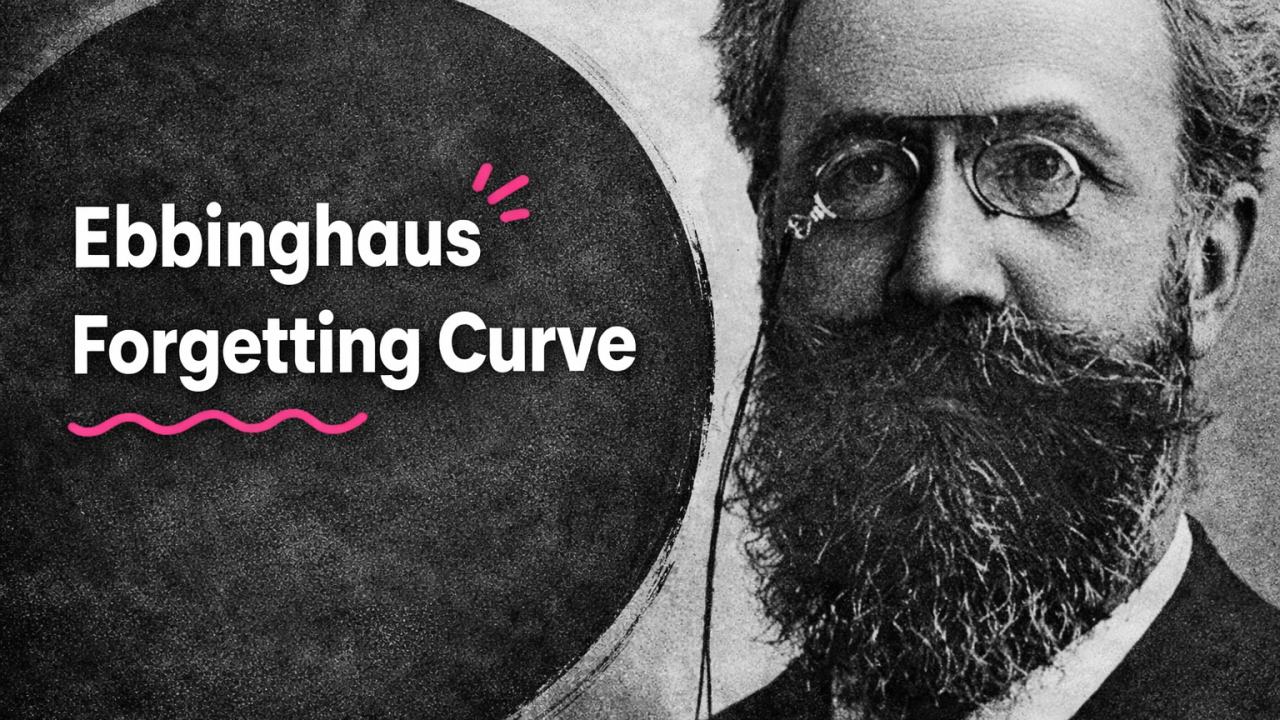
In the late 1800s, German psychologist Hermann Ebbinghaus discovered something uncomfortable about human learning: we forget incredibly fast.

Ebbinghaus found that memory loss is exponential and most rapid immediately after learning. Humans tend to forget about 50% of new information within an hour and roughly two-thirds within 24 hours if it is not reviewed.

Article content

Within days, people can forget the majority of new information if it isn’t reinforced.

This phenomenon became known as the Forgetting Curve.

Now think about what organizations still do today:

  • One-time training sessions
  • Long safety videos
  • Annual compliance “check the box” courses
  • Information overload in a single sitting

Traditional training assumes that people remember it months later, but evidence suggests that is far from being the case. Unfortunately, businesses are pouring water into a leaking bucket.

The Real Cost of Forgetting

When learning isn’t reinforced:

  • Safety incidents repeat
  • Bad habits return
  • Compliance drops
  • Companies keep paying for the same training again and again

While companies have the best intentions to cultivate safety, the problem is that human brains are just not designed to retain this type of training. It’s just how the brain works.

How Memory Actually Sticks

Research shows retention improves dramatically when learning is:

  • Repeated over time (spaced repetition)
  • Short and focused (micro-learning)
  • Memorable and emotional (humor, stories, visuals)
  • Relates to real situations

In other words:

Instead of a one-time event, training must become a continuous behavioral nudge.

The Bottom Line

If your training isn’t reinforced regularly…

You’re just pouring money down the drain.

Julie E

Written by Julie E

Passionate about driver education and safety, Julie Eydman, Ed.D., is a leader who operates at the intersection of technology, education, and behavioral science, helping organizations turn complex data and emerging tech into simple, human-centered experiences that drive growth and learning. Julie holds a doctorate in Organizational Change & Leadership and a graduate certificate in Learning Design & Technology from USC Rossier School of Education.

You might also like...
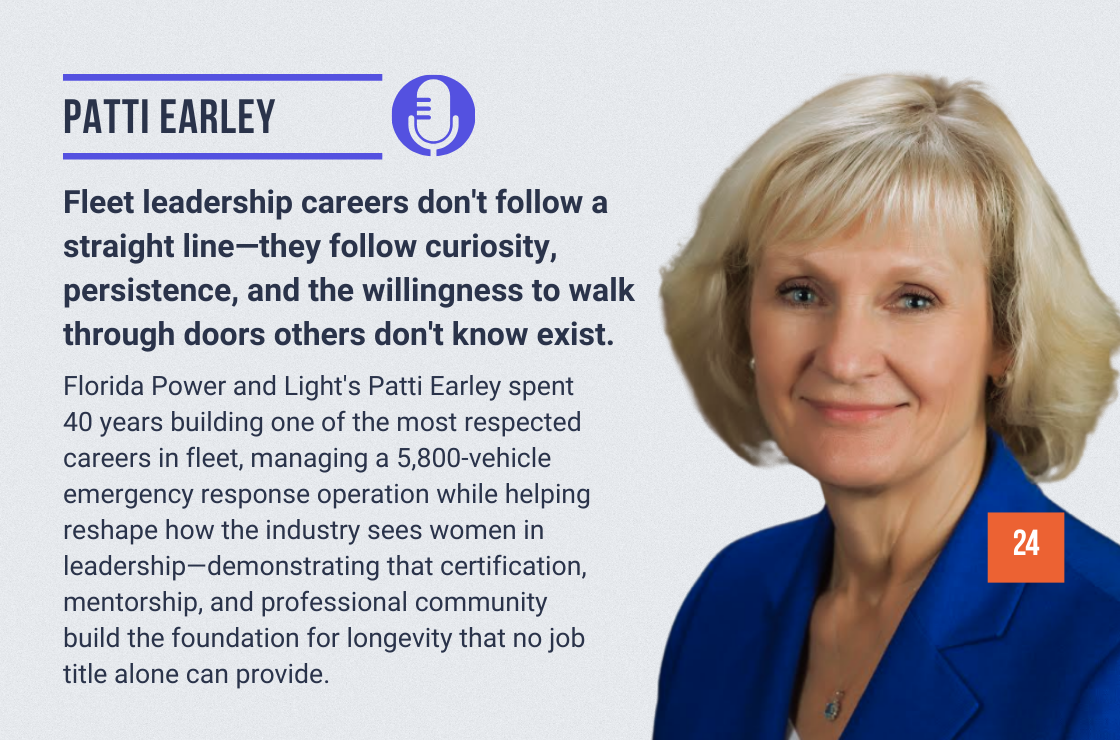
Adaptability as Competitive Advantage: How 40 Years in Fleet Leadership Prepares You for AI Disruption

Adaptability as Competitive Advantage: How 40 Years in Fleet Leadership Prepares You for AI Disruption

Patti Earley is Fleet Fuel Operations Manager at Florida Power & Light,...

IMPROVLearning to Debut NEURO IQ™ AI Behavioral Platform for Fleet Driver Safety at Geotab Connect 2026

IMPROVLearning to Debut NEURO IQ™ AI Behavioral Platform for Fleet Driver Safety at Geotab Connect 2026

Interactive Education Concepts, widely known as IMPROVLearning™, is set to ...

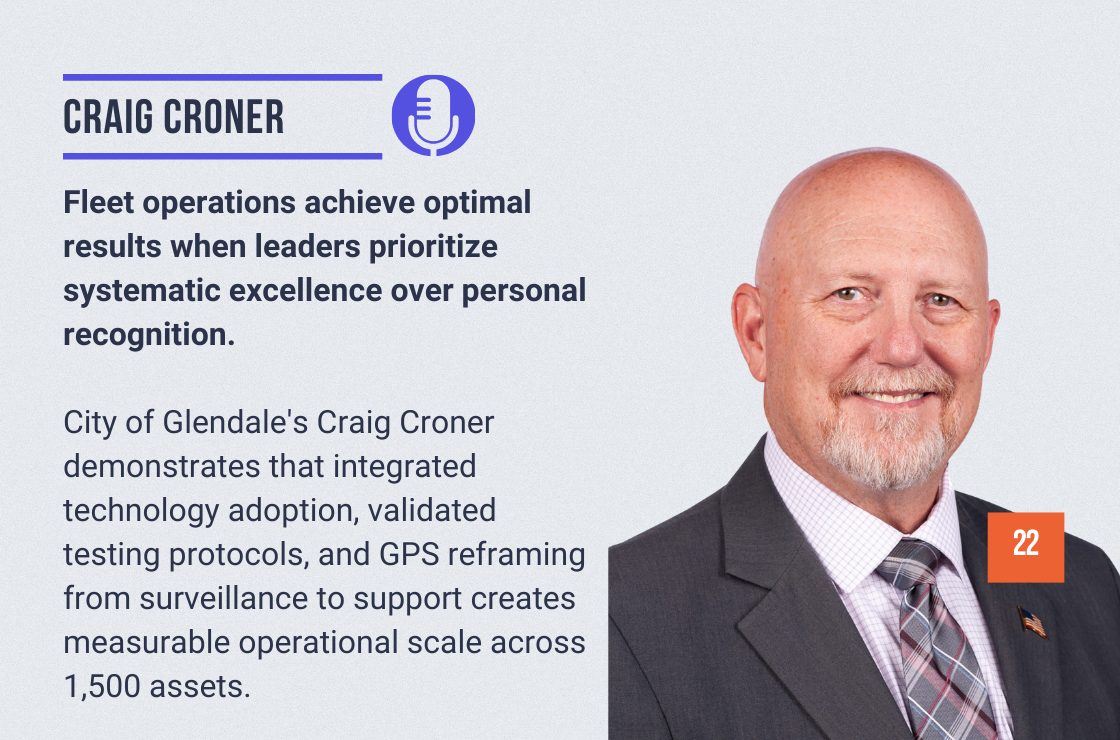
Silent Support, Massive Impact: How Fleet Operations Run a City—And Earn Zero Credit for It

Silent Support, Massive Impact: How Fleet Operations Run a City—And Earn Zero Credit for It

Craig Croner is Deputy Director of Fleet Operations for the City of Glendal...

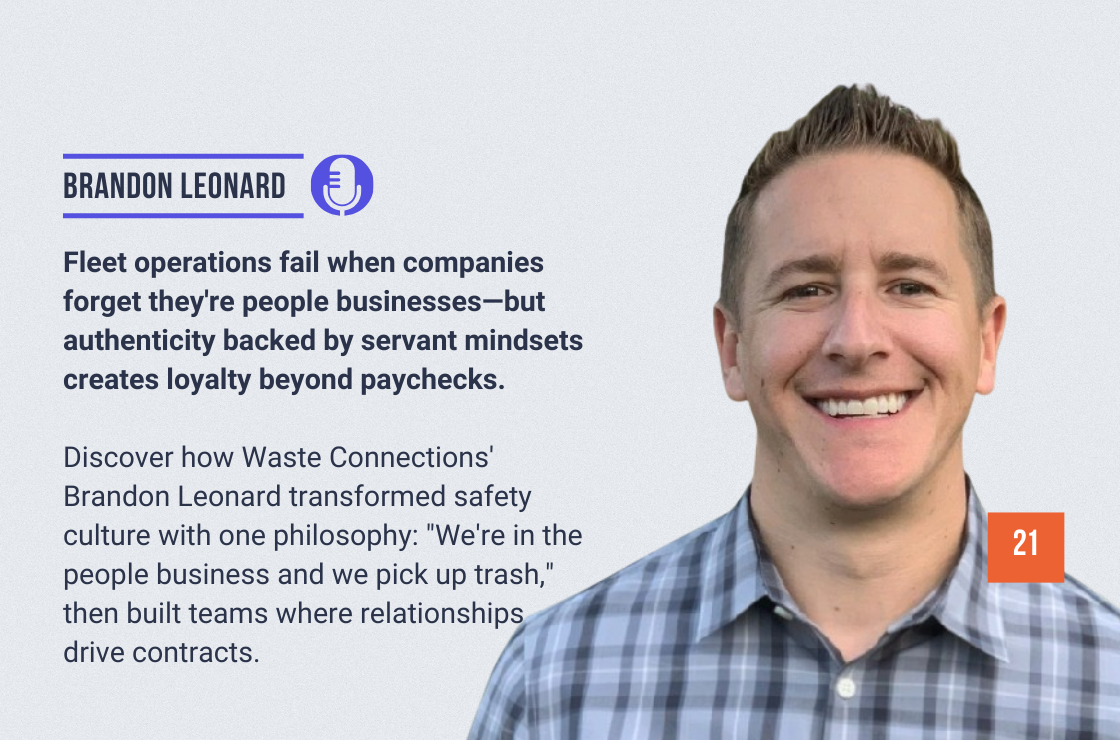
We’re in the People Business: How Waste Connections Puts Culture Over Compliance

We’re in the People Business: How Waste Connections Puts Culture Over Compliance

Brandon Leonard is the Region Safety Manager at Waste Connections, one of N...

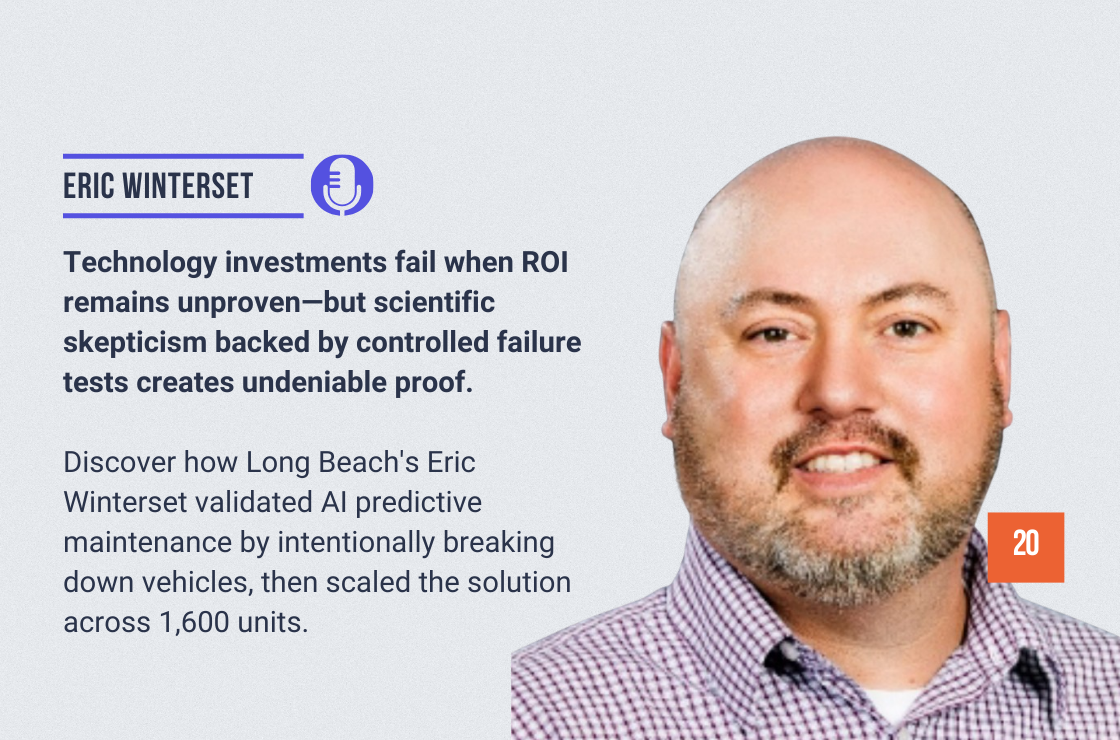
When Technology Meets Tight Alleys: Running a Modern Municipal Fleet

When Technology Meets Tight Alleys: Running a Modern Municipal Fleet

Eric Winterset is the Fleet Services Bureau Manager for the City of Long Be...