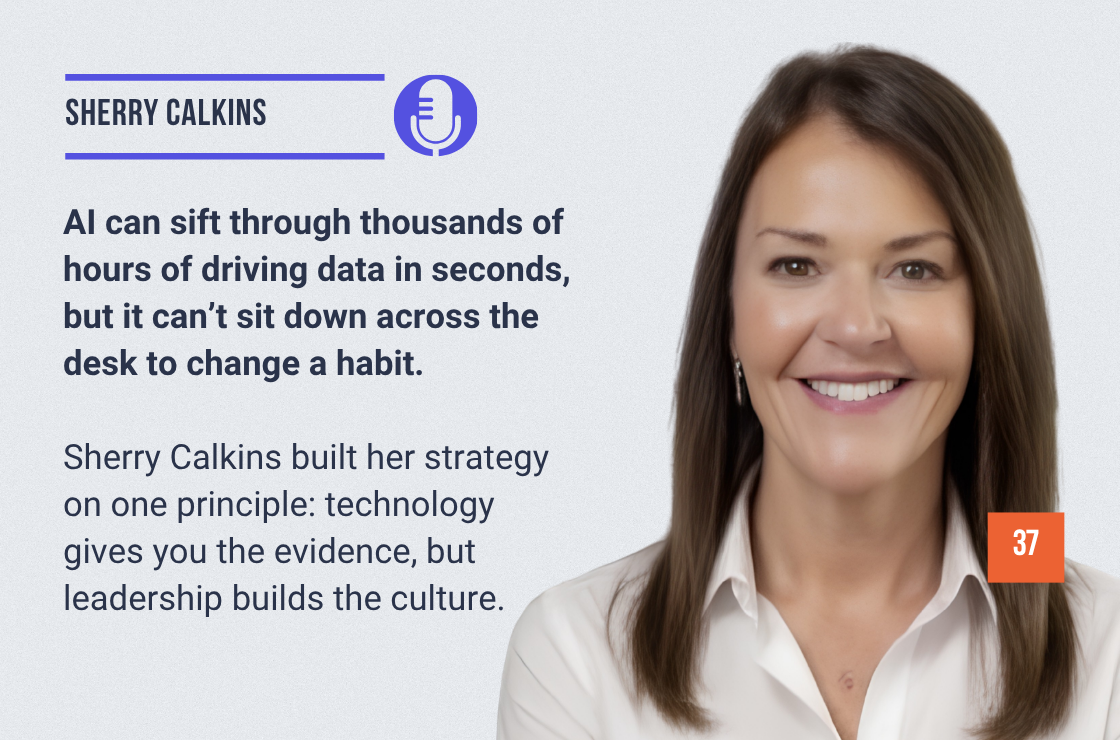
Sherry Calkins is a recognized leader in the fleet industry with nearly three decades of experience in government and private-sector fleet operations before moving into technology leadership at Geotab. Along the way, she has become a prominent voice in connected mobility, fleet data, AI, and strategic partnerships. She has served on industry boards and was inducted into the Automotive Fleet Hall of Fame.
She has spent her career watching fleet evolve from a largely operational function into a strategic part of the business. She believes the next phase will be defined by how effectively people use technology, not simply how much technology they have.
In this episode of Road Rageous, host Chad Lindholm sits down with Sherry to explore that evolution. They discuss the shift from spreadsheets, service intervals, and manual fleet management to a world of AI, video intelligence, automation, autonomous vehicles, and increasingly connected fleets. But the conversation goes beyond technology. Sherry explains why data is only useful when it leads to better decisions, why the human element remains essential to changing driver behavior, and why the strongest fleet leaders of tomorrow will be those willing to keep learning, adapting, and leaning on their networks.
Here’s a glimpse of what you’ll learn:
- [1:41] How Sherry accidentally fell into fleet — and turned an operations manager role into nearly three decades in the industry
- [3:11] Why fleet has evolved from a cost center into a strategic asset, and how technology changed the role of the fleet manager
- [6:54] How globalization, technology, and industry collaboration are changing the fleet community
- [8:30] The mentorship advice that shaped Sherry’s career — and why she still believes nobody is too experienced to learn
- [11:41] How data is helping fleets lead with evidence instead of assumptions
- [12:06] Why AI could change the way fleet professionals work with data — without replacing the human element
- [17:27] What tomorrow’s fleet leader will need to know about AI, data, and technology
- [24:37] Why the vehicles of the future could become purpose-built platforms for individual fleet operations
- [27:29] How technology, automation, and AI are changing fleet maintenance and vehicle operations
- [28:56] The biggest challenge in fleet safety: changing driver mindset and behavior
- [29:19] What telematics can tell you, and what video intelligence reveals that data alone cannot
- [30:40] Why positive reinforcement and recognition can be more effective than punishment when coaching drivers
- [37:29] Why Sherry says the industry needs to move faster — and what success looks like to her today
- [38:24] Her advice for the next generation: have a voice, believe in yourself, and build your network
Fleet is no longer just a cost center
When Sherry Calkins entered fleet nearly three decades ago, she did not even know what the word meant. Fresh out of university and working at a dealership, she came across an operations manager position in the fleet department. She had to look up what fleet was before applying. She had automotive experience and a passion for vehicles but no expectation that the opportunity would turn into a career spanning nearly three decades. It did.
“Fleet’s not a cost center, it’s a strategic asset.”
— Sherry Calkins
That long view gives Sherry a unique perspective on how dramatically the industry has changed. When Sherry started, fleet managers needed to understand the mechanics of the operation in detail; maintenance schedules, diagnostic trouble codes, service intervals, breakdowns, and everything in between. Today, technology can surface much of that information for them. The role is changing from knowing every answer to knowing how to find, interpret, and act on the right answer.
From data overload to actionable insight
The industry has spent years collecting more data. Telematics, connected vehicles, dashboards, and other technologies have given fleet professionals unprecedented visibility into what is happening across their operations. But visibility can quickly become overwhelming. Sherry describes an industry that has spent years dealing with data overload. too much information, too many dashboards, and too many places to look for answers.
AI could change that relationship with information.
“Literally you can ask virtually any question and have it provide you the answers back.”
— Sherry Calkins
Rather than spending hours moving between spreadsheets and dashboards, fleet professionals can ask questions directly and use AI to surface the information they need. For Sherry, that does not mean technology replaces the fleet professionals. It makes that professional more capable.
“The human element is always going to be necessary.”
The opportunity is to use AI to make fleet professionals more effective and efficient while bringing them deeper into the broader business strategy.
Technology can see the risk. People still have to change.
That distinction becomes especially important when the conversation turns to safety. Fleet has more technology than ever. Vehicles are becoming smarter. Telematics can identify behaviors. Video can show what is actually happening on the road. Yet crashes remain a persistent problem.
For Sherry, that is because technology has not eliminated the hardest part of safety.
“It’s been the biggest challenge since we’ve had fleet drivers.”
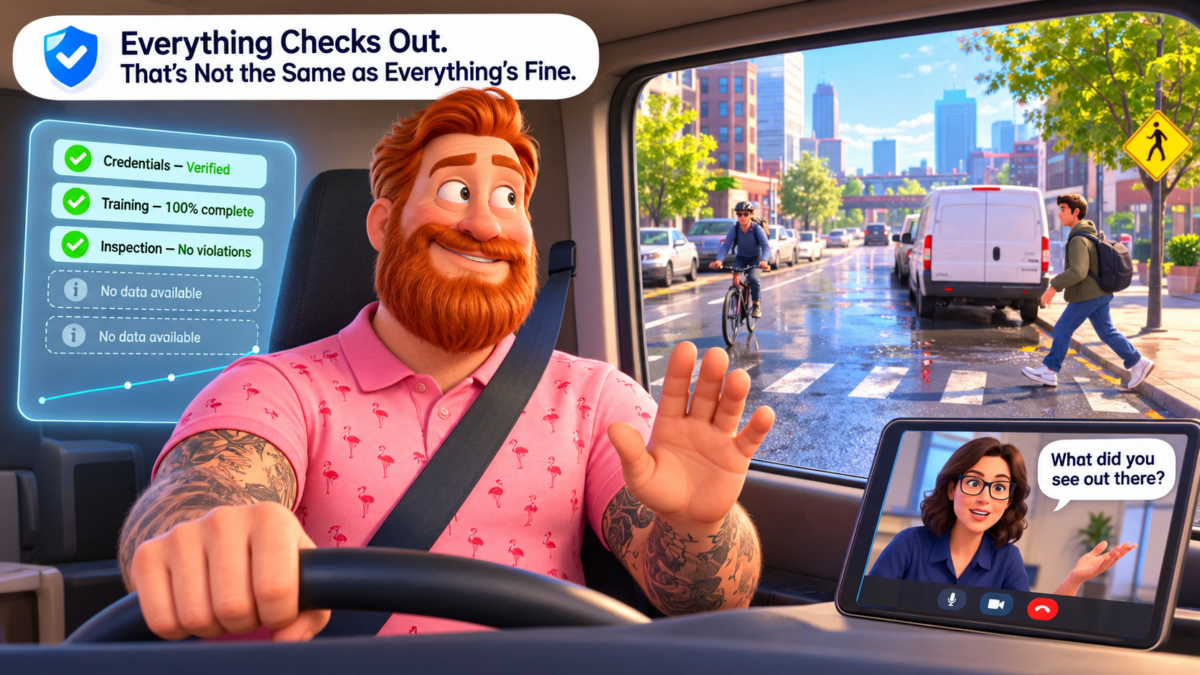
Changing driver mindset and behavior remains one of the industry’s central challenges. Video intelligence has helped fleets understand behavior in ways they could not before. Sherry gives the example of seatbelt compliance: telematics might show that a seatbelt is buckled, but video can reveal that a driver buckled it and then sat on top of it rather than actually wearing it.
The data is not necessarily wrong. It simply does not tell the whole story. That distinction matters because better technology does not just create more information. It creates more context.
Coaching is still a human conversation
A fleet can have cameras, telematics, alerts, and dashboards, but none of those can sit down with a driver and change how that person thinks about a decision.
That is where coaching comes in. Sherry believes positive reinforcement can play an important role in behavior change. Recognition, friendly competition, and giving drivers a reason to take ownership of safety can create a different response than simply punishing people when something goes wrong. The goal is not simply compliance. It is creating safer decisions that eventually become habits. That is where technology and people have to work together.
The future of fleet will be more automated and more specialized
Sherry sees the technology curve extending beyond today’s telematics and AI tools. Maintenance workflows could become more automated. Technicians may access diagnostic information through wearable technology instead of relying on a computer or scan tool.
Vehicles could become increasingly purpose-built for the companies operating them. She envisions a future where cameras, applications, and other technologies are built directly into vehicles, creating platforms tailored to individual fleet operations.
This evolution could also extend into the cab. Instead of drivers interacting with screens, voice commands and AI could let them request directions, access applications, and interact with the vehicle without taking their eyes off the road. Technology will continue to change. The question is how quickly fleet leaders are willing to adapt.
The network may be one of fleet’s greatest advantages
For all the discussion about AI and automation, one of the most important lessons Sherry learned has nothing to do with technology. It came from her first fleet manager, Bruce Yonken.
His advice was simple: get involved in the industry, learn from the best, participate in associations, and build a network. Sherry followed that advice throughout her career and eventually became a mentor herself. She has not stopped learning.
“I don’t think you’re ever too old or too experienced to learn from others and continue to want to professionally evolve.”
— Sherry Calkins
That philosophy matters in an industry where people frequently move between fleet operators, suppliers, technology companies, and other parts of the ecosystem. The fleet industry may be large, but its professional network is remarkably connected.
Building relationships is not just about career advancement. It is a way to gain different perspectives, benchmark operations, and keep learning as the industry changes.
What the next generation of fleet leaders needs
For Sherry, the fleet manager of tomorrow will not necessarily look like the fleet manager of yesterday. The fundamentals of managing people, assets, and operations remain. But the tools available to those leaders are changing rapidly. Her advice is straightforward: embrace AI. Not because AI is replacing fleet professionals, but because refusing to learn how to use it risks leaving valuable tools unused. If you do not know where to start, Sherry suggests starting with the people around you.
“Always lean on your network, see what they’re doing. Talk to your peer groups too. How are they using it?”
Even small applications of AI can create meaningful efficiencies and free fleet professionals to focus on higher-value work. For Sherry, that is the bigger opportunity: technology lets fleet leaders spend less time managing information and more time using it to drive the business forward.
Quotable moments
- “Fleet’s not a cost center, it’s a strategic asset.”
- “Especially having data today, we can lead with data versus assumptions.”
- “Literally you can ask virtually any question and have it provide you the answers back.”
- “The human element is always going to be necessary.”
- “It’s been the biggest challenge since we’ve had fleet drivers.”
- “I don’t think you’re ever too old or too experienced to learn from others.”
- “Always lean on your network, see what they’re doing.”
- “To have safer drivers on the road.”
Action steps
- Start using AI where it can remove friction. Look for repetitive tasks, information gathering, note-taking, follow-ups, and other areas where AI can give you time back.
- Lead with data instead of assumptions. Use the information available to understand what is actually happening in your operation before deciding what needs to change.
- Don’t confuse visibility with behavior change. A camera or telematics alert identifies a behavior. Coaching and reinforcement are what can change it.
- Use video to add context to telematics. Data can tell you that something happened. Video can help explain why.
- Build your network deliberately. Learn from peers, vendors, associations, mentors, and people who have perspectives different from your own.
- Keep learning even when you’re experienced. The pace of technological change means that expertise cannot be treated as a finished product.
- Bring fleet deeper into the business. Use technology and data to move beyond managing assets and become part of the organization’s broader operational and strategic decisions.
Key takeaways
- Fleet has evolved from a cost center into a strategic asset.
- Technology has changed the fleet manager’s role from managing information manually to interpreting and acting on it.
- AI can reduce data overload and help fleet professionals focus on actionable insights.
- Technology can identify unsafe behavior, but changing driver behavior still requires a human response.
- Video intelligence adds context that telematics data alone may not provide.
- The future of fleet will bring greater automation, AI, connected vehicles, and purpose-built technology.
- The strongest fleet leaders will be those who embrace technology while continuing to develop their judgment, relationships, and leadership skills.
- A strong professional network is one of the industry’s most valuable resources for learning and adapting.
Conclusion
Sherry Calkins began her career in fleet when someone took a chance on a 27-year-old unfamiliar with the term. Nearly thirty years later, she observes the industry undergoing one of its most significant transformations.
Technology will continue to advance, with AI becoming more capable and vehicles increasingly connected, automated, and specialized. However, the human element remains essential. The fleet professionals who succeed will not necessarily be those who master every new technology first, but those who ask insightful questions, learn from others, adopt new tools, and use information to make better decisions. As Sherry notes, the industry is “forever evolving and growing.” This ongoing change underscores the importance of staying curious.
Resources mentioned in this episode
About Sherry Calkins
Sherry Calkins has nearly three decades of experience in fleet management, spanning government and private-sector fleet operations before moving into technology leadership at Geotab. She is a recognized voice in connected mobility, fleet data, AI, and strategic partnerships, and has served on numerous industry boards. She was inducted into the Automotive Fleet Hall of Fame for her contributions to the industry.
Sponsor
IMPROVLearning — At IMPROVLearning, we are dedicated to transforming driver education through innovative, research-backed training methods. Our SPIDER Driver Training platform combines humor with proven brain-training techniques to help drivers anticipate and avoid dangers on the road. John Kearns and Michael Sorrell’s conversation makes one thing clear: technology can flag a risk, but trained drivers make the split-second decisions that prevent it from becoming a claim. SPIDER training develops hazard recognition, space management, and decision-making under pressure the same behaviors underwriters are ultimately pricing. Visit improvlearning.com.
 Learner Login