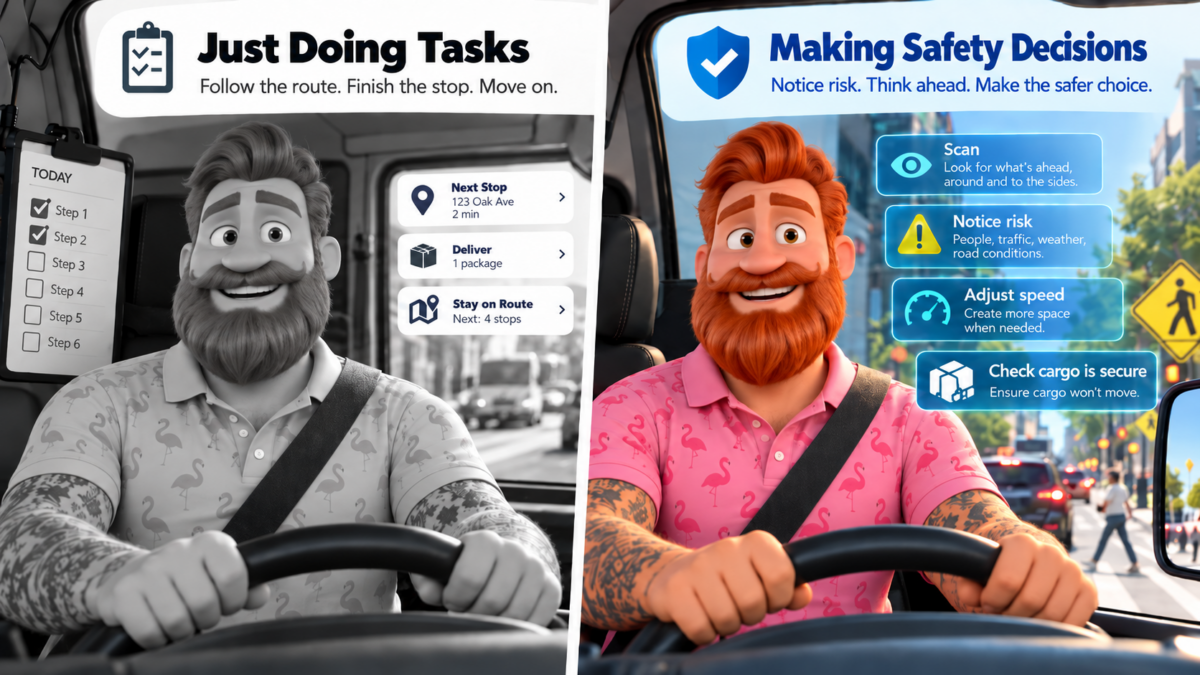
Fleets have more information about risk than ever before. Telematics reveal driving patterns, cameras provide context around events, and claims data help organizations understand where losses occur. Yet having that information does not automatically make a fleet safer.
The challenge begins when the data arrives. Who is responsible for interpreting it? Which risks deserve attention first? What happens when a recurring problem is identified? And how can an organization tell whether its response has changed behavior or produced only a short-term improvement?
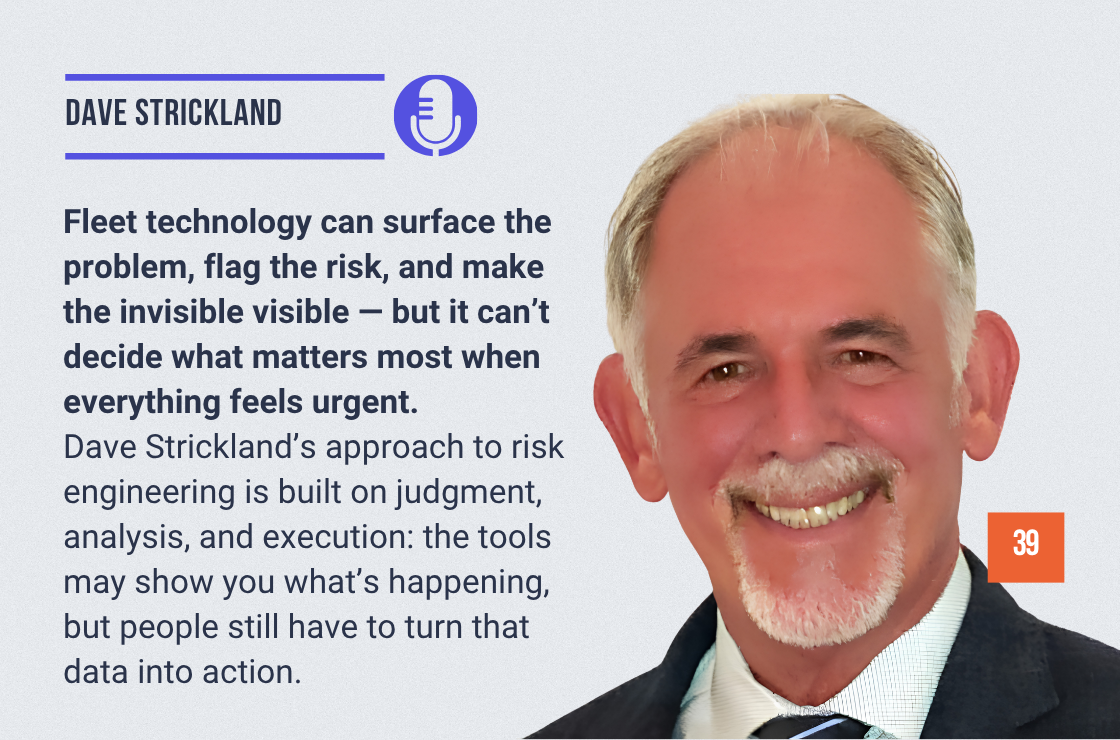
These questions are central to a conversation between IMPROVLearning’s RoadRageous host Chad Lindholm and Dave Strickland, Vice President and Head of Casualty Risk Engineering at Zurich Resilience Solutions.
Drawing on nearly four decades in risk engineering and insurance, Strickland explores why effective risk management requires more than technology, training records or compliance. It depends on translating information into consistent action and building the organizational habits that sustain it.
Here’s a glimpse of what you’ll learn
- 11:45 — Moving from reactive to proactive safety: Why organizations may want to prevent losses but still need help determining where to begin.
- 14:28 — Turning telematics data into meaningful action: How fleets can avoid becoming overwhelmed by information and start using it to influence behavior.
- 17:29 — The responsibility that comes with visibility: Why identifying a risk creates an obligation to respond, and why documented processes matter.
- 24:09 — Moving beyond compliance: How fleet safety expectations are changing as liability exposure and the consequences of poor risk management grow.
- 44:48 — Using technology to make more room for people: Why AI and other tools should help organizations focus their efforts rather than remove the human element.
- 46:43 — Making risk engineering a partnership: How a collaborative approach can support sustained improvement instead of a one-time inspection.
- 54:49 — Finding the expertise to move forward: Why organizations should look beyond their internal resources when building and validating safety initiatives.
The gap between seeing risk and managing it
For much of fleet safety history, organizations worked with limited visibility. They could review crash records, investigate incidents and identify problems after something went wrong. Today, technology reveals far more about what happens on the road, sometimes in considerable detail. That change is valuable but creates a different challenge. As Strickland explains, telematics can generate a tremendous amount of information without ensuring anyone is using it. The data may be available, but someone still needs to interpret it, decide what matters and connect it to an action that can improve performance.
This is particularly difficult for organizations that introduce new technology without assigning clear responsibility for managing the information it produces. The person receiving alerts may already have a full-time role in operations, maintenance or safety. Turning the data into a useful intervention requires additional time, attention and a clear understanding of what the organization wants to achieve.
The answer is not to use every available feature immediately. Strickland describes the value of starting with a defined objective, creating focus and expanding the program as the organization learns where the technology can make a difference. For fleet leaders, that means asking a more useful question than whether they have enough data. They need to know whether the information is changing the decisions people make.
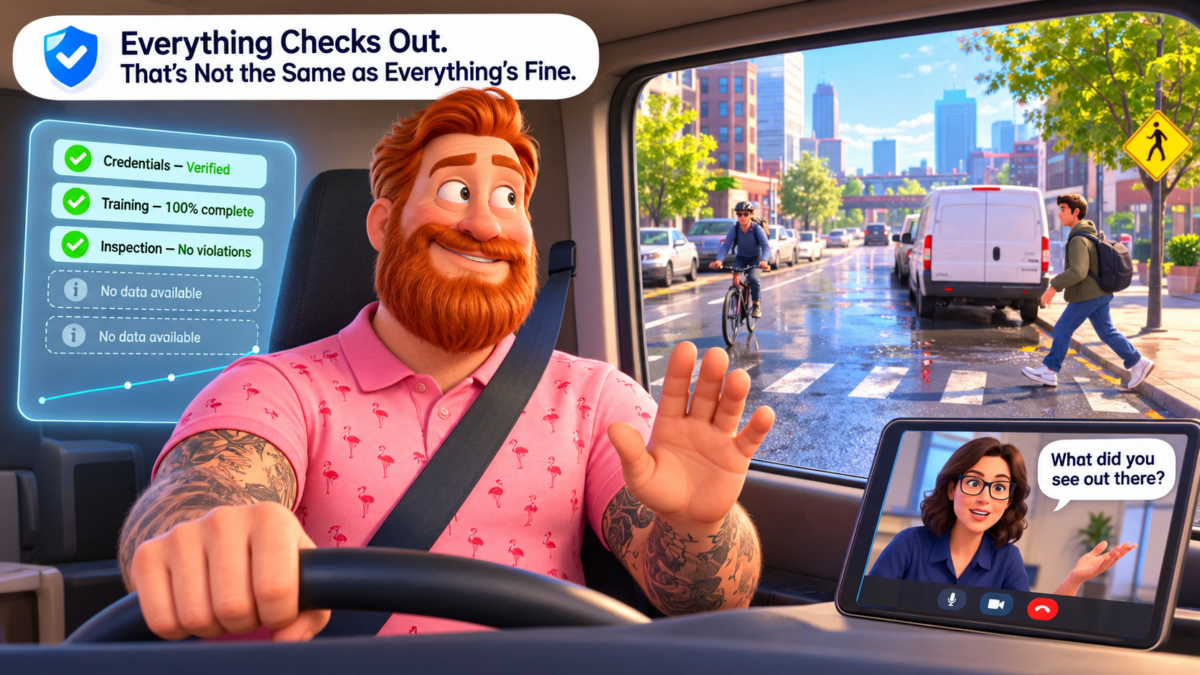
A telematics alert is not a coaching conversation. A trend report is not a corrective action. And a dashboard showing a recurring behavior does not, by itself, demonstrate that the organization is managing that behavior. The value emerges when information becomes the starting point for understanding what is happening and deciding what to do next.
Compliance establishes a baseline, not the finish line
The distinction between identifying a risk and acting on it becomes especially important when an organization faces a serious claim or litigation. Strickland points out that many risks on the road are outside a fleet’s control. Other drivers, weather and road conditions can all contribute to an event. What an organization can influence is how it selects drivers, maintains its vehicles and manages the risks within its own operations. That is where structured processes matter.
Policies and procedures need to exist, but they also need to be followed. When an organization identifies a deficiency through an inspection or its own data and then fails to address it, the original act of identifying the problem offers little protection. Technology makes this responsibility more visible. Patterns that may once have been difficult to observe can now appear repeatedly in a fleet’s data.
The question is no longer only whether the organization had a way to identify a risk. It is whether the organization had a process for responding to what it found. As Strickland puts it, “compliance is no longer the benchmark that we should be achieving.” The point is not that compliance is unimportant. It establishes essential expectations. But a fleet can meet a minimum requirement without building the practices needed to manage its particular risks effectively.
That requires a more deliberate approach: identifying the risks that matter, assigning responsibility, taking action, documenting what was done and checking whether the response made a difference. For fleet and safety leaders, this is both a risk-management issue and a learning issue. If the same behavior or deficiency keeps appearing, the organization needs to look beyond whether a rule was communicated. It needs to examine whether people understand the expectation, have the ability to meet it and receive the right support to change.
Why a quick improvement does not always become lasting change
Organizations often respond to a safety concern with a focused initiative. They introduce training, draw attention to a particular behavior or increase monitoring. The initial results may be encouraging and useful. But Strickland cautions that the immediate effect of attention is not necessarily sustainable. Chad Lindholm makes a similar observation from the driver-training perspective: a training day or a one-time intervention can create a noticeable change, but maintaining that change over time is harder.
The distinction matters because safety is not a single event on the calendar. It is the accumulation of decisions people make while doing their jobs, often under pressure, when nobody is watching and the situation does not unfold exactly as expected. A driver may understand the importance of following a safe practice during training but struggle to apply it consistently on a demanding route. A supervisor may recognize a risk but lack the time or confidence to have a constructive conversation about it. An organization may communicate a new expectation without creating a process for reinforcing it.
In each case, the information or instruction may have been delivered. What remains uncertain is whether it has become part of how people work. Strickland also encourages organizations to consider safety alongside productivity, morale and culture. These factors are connected. An initiative that makes sense on paper may struggle if it ignores the realities of the workforce or the operational pressures employees face.
Lasting improvement requires more than repeating a message. It means creating opportunities to practice, discuss, reinforce and apply what has been learned. It also means understanding the barriers that make a behavior difficult to sustain. For fleet leaders, the practical question is not simply whether a training initiative was completed. It is what happens after it ends.
Technology should create more room for human judgment
The growing role of data and AI raises an important question: as organizations automate more analysis, what should people spend their time doing? Strickland sees technology as a way to create focus and help organizations develop better strategies, not as a replacement for people. He explains how the human element can be lost when organizations try to use technology to deliver everything, including interactions that depend on understanding and empathy. The most useful application of technology may be to give people more time for work that technology cannot fully replace: interpreting context, asking questions, building trust and helping others make better decisions.
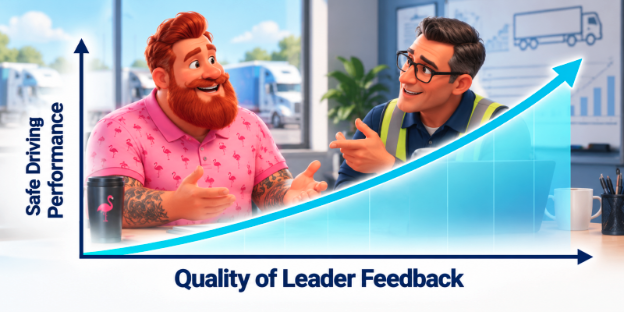
That distinction is particularly relevant to driver coaching. Data can show that a behavior is recurring, but it may not explain the full circumstances behind it. A conversation can help a supervisor understand what the driver experienced, how the decision was made and what support might prevent the behavior from recurring. The same principle applies to safety managers who need to prioritize competing risks. Technology can help direct attention toward the issues that matter most, but human judgment remains necessary to decide how to respond and how to communicate that response effectively.
This is where effective learning becomes more than the delivery of information. People need opportunities to test their understanding, respond to changing circumstances and build confidence in making safer decisions. A useful coaching conversation is not simply a reminder of the rule; it is a chance to understand the decision and help improve the next one. Technology earns its place when it strengthens those interactions rather than displacing them.
Risk management works better as a partnership
Strickland’s own career reflects a wider evolution in risk engineering. He describes an earlier approach in which a risk professional might inspect an operation, identify deficiencies and leave a list of recommendations. The relationship could be transactional, with attention often shaped by the annual insurance policy cycle. Over time, he has seen greater value in treating risk engineering as an ongoing partnership. Each organization has a different culture, resources and level of experience. An approach that works for one fleet may not be practical or appropriate for another. A collaborative relationship makes it possible to understand those differences, agree on priorities and develop pragmatic ways to make progress. It also allows the work to continue beyond a single inspection or policy year, giving organizations more opportunity to sustain improvements.
External expertise can be valuable here. Strickland notes that many organizations do not have all the internal resources they need to advance their initiatives. Insurers and risk engineering specialists may offer experience, industry comparisons and insight into practices that have worked elsewhere. An independent perspective can also help an organization evaluate its own efforts and identify opportunities it might otherwise miss.
The value of that partnership is not simply another report or set of recommendations. It is the ability to turn experience into a practical plan, then help the organization follow through. That is also why benchmarking can be useful when it moves beyond broad comparisons. Understanding how an organization performs against peers is one thing. Examining the activities and circumstances behind its own losses can reveal more specific opportunities for improvement. Ultimately, the goal is to help people inside the organization make better decisions and build practices that continue to work after the external adviser has left.
Action steps for fleet and safety leaders
The conversation offers several practical questions leaders can use to evaluate their own safety programs.
- Start with the outcome, not the dashboard. Identify what the organization wants to improve before deciding which data to prioritize. This gives teams a clearer basis for interpreting information and measuring progress.
- Assign responsibility for acting on risk. Make sure someone is accountable for reviewing relevant information, prioritizing concerns and ensuring that identified issues are addressed.
- Close the loop. Document the response to a recurring risk and revisit it to determine whether the action was effective. An alert or completed training record should not be mistaken for proof of improvement.
- Build reinforcement into the process. Use follow-up conversations, practice and ongoing learning to help people apply safety expectations consistently, rather than relying on one-time initiatives.
- Use technology to support human interaction. Let data help prioritize coaching and identify patterns, while preserving the conversations needed to understand context and influence behavior.
- Bring in outside expertise when it adds value. Consider whether an insurer, risk engineering partner or industry peer can offer a useful perspective, help benchmark performance or validate an improvement plan.
Key takeaways
- Visibility creates an opportunity, not an outcome. Data only improves safety when people use it to make decisions and take action.
- Compliance is a starting point. Effective risk management requires processes that are followed, documented and reviewed.
- Short-term results are not the same as lasting change. Sustainable improvement depends on reinforcement, culture and the conditions in which people work.
- Technology is most useful when it strengthens human judgment. Information can help direct attention, but people still need to interpret context and support behavior change.
- Risk management is an ongoing relationship. Internal teams, insurers and external specialists can work together to turn insight into practical, sustained improvements.
Conclusion: The real test is what happens next
A fleet may have cameras in its vehicles, telematics across its operations, detailed policies and a full record of completed training. Those are useful capabilities, but they do not answer the most important question. When a risk becomes visible, what happens next? The answer depends on whether the organization has a process for responding, whether people have the time and support to act, and whether the response leads to a lasting change in behavior. It depends on leaders who see safety not as a box to check, but as a practice that must be reinforced in everyday decisions.
Strickland’s perspective offers a reminder that risk management is ultimately about people: the people making decisions, the people responsible for supporting them and the people who need to get home safely at the end of the day. The goal is not simply to know more about risk. It is to build an organization that knows what to do with what it knows.
Resources and topics mentioned
- Zurich Resilience Solutions: Risk engineering expertise and support for organizations seeking to identify, prioritize and manage operational risks.
- Telematics and camera data: Tools that can help fleets identify patterns and inform targeted interventions.
- Claims and loss analysis: Reviewing the circumstances behind losses to identify more specific opportunities for improvement.
- Industry benchmarking: Comparing practices and performance to learn from other organizations and identify areas for progress.
- Dave Strickland on LinkedIn
- Chad Lindholm on LinkedIn
- SPIDER Driver Training by IMPROV Learning
About Dave Strickland
Dave Strickland is Vice President and Head of Casualty Risk Engineering at Zurich Resilience Solutions. With nearly four decades of experience in risk engineering and insurance, he works with organizations to identify and address operational risks. He began his career as a teacher before moving into insurance loss control, where he found a long-term vocation helping businesses operate more safely.
Sponsor
IMPROVLearning — At IMPROVLearning, we are dedicated to transforming driver education through innovative, research-backed training methods. Our SPIDER Driver Training platform combines humor with proven brain-training techniques to help drivers anticipate and avoid dangers on the road. John Kearns and Michael Sorrell’s conversation makes one thing clear: technology can flag a risk, but trained drivers make the split-second decisions that prevent it from becoming a claim. SPIDER training develops hazard recognition, space management, and decision-making under pressure the same behaviors underwriters are ultimately pricing. Visit improvlearning.com.
About RoadRageous
RoadRageous explores safer driving, smarter training and bold ideas across the fleet industry. Hosted by Chad Lindholm, the podcast features conversations with industry innovators and thought leaders on fleet safety, driver training, risk management and the people behind better outcomes.
 Learner Login