A safety system is only as effective as the information it receives. This principle is central to the legal debate over the Federal Motor Carrier Safety Administration’s (FMCSA) revised rule for non-domiciled commercial driver’s licenses (CDL). The rule addresses the need for states to have reliable information to determine if CDL applicants meet commercial operation requirements, including valid immigration status.
The revised framework emphasizes verification through specific documentation, federal SAVE system queries, credential validity limits, license audits, and downgrades when status cannot be confirmed.
While this approach aims to make information more reliable, the court challenge raises a critical question: Can a safety problem be identified if the underlying risk cannot be measured?
This issue extends beyond one regulation and challenges how organizations define safety, risk, and necessary change.
When missing information becomes the problem
The dispute over non-domiciled CDLs is not just about driver safety. FMCSA’s revised justification highlights the difficulty states face in obtaining and verifying foreign driving histories and interpreting work authorization documents. The agency argues that when states lack the information needed for consistent evaluation, the system cannot provide the same level of confidence. While a driver’s history is important for assessing future risk, there is a key difference between needing better information and assuming that missing information indicates greater risk.
Missing data does not automatically signal a negative outcome; it may simply reflect limited system visibility. During oral arguments, judges acknowledged the importance of driving records but questioned whether the rule’s substitutes truly establish the necessary safety connection. This underscores a principle familiar to fleet leaders: measurements are only valuable if they provide meaningful insight into the risks being managed.
Proxies such as safety scores, training completion, clean inspections, and valid credentials are useful, but they are not the risk itself. The risk arises when organizations focus on proxies because the actual risk is harder to measure.
Verification is not the same as risk visibility
This regulatory debate is highly relevant to fleet safety. Verification can answer whether credentials are valid, documentation is complete, or federal databases confirm status. These answers are important, but they do not address equally critical questions:
- How does the driver behave?
- Are there recurring patterns?
- Does the driver recognize risk?
- How does the driver respond to unexpected situations?
These questions require different forms of visibility. Driving records show past behavior, telematics reveal current actions, training introduces knowledge, and coaching uncovers decision-making processes. No single method provides certainty, but together they offer a more comprehensive view of risk.
As fleets gather more data, it is important to remember that more information does not guarantee greater understanding. Dashboards may show harsh braking or camera events, but they do not explain context or predict future behavior. Data should start conversations, not end them. The most effective safety systems use data for visibility and human interaction for understanding.
Compliance verifies the past, but safety must influence future actions.
The non-domiciled CDL debate highlights the challenge of assessing driving history when documentation is incomplete. The revised framework sets eligibility and verification requirements, but the court’s questions reveal a broader issue: Are we measuring actual risk, or just the presence of proxy information?
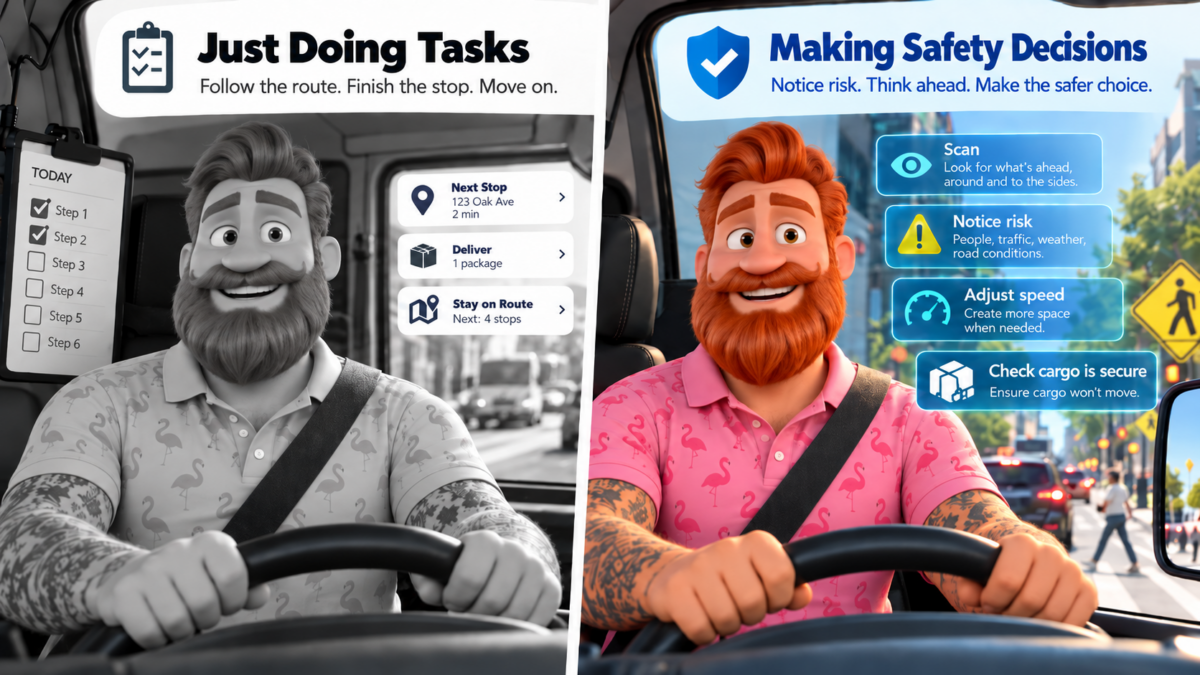
Documentation is essential for a defensible safety program, but it is important to understand its limitations. The same applies within fleets. Completing training shows participation, not competence under pressure. Fewer alerts may suggest lower risk, but do not confirm it. Coaching assignments show intervention, not necessarily behavior change. The real test is how drivers respond to changing conditions and pressures.
Effective safety education must go beyond information transfer, providing opportunities for drivers to apply lessons, reflect on behavior, and develop sound judgment. This approach aligns with the principles behind IMPROVLearning. Learning should create environments where people engage with situations, experiment with decisions, and apply understanding in real-world contexts. For fleet leaders, the goal is not just to record completed training, but to connect training with observed behavior, coaching, and measurable improvement.
Better safety systems build visibility before certainty is possible
Fleet executives should not wait for perfect information. Instead, they should create enough visibility to make informed decisions and continually improve that visibility. This means looking beyond credentials to actual behavior, evaluating whether training changes actions, and using data to identify patterns that inform meaningful conversations.
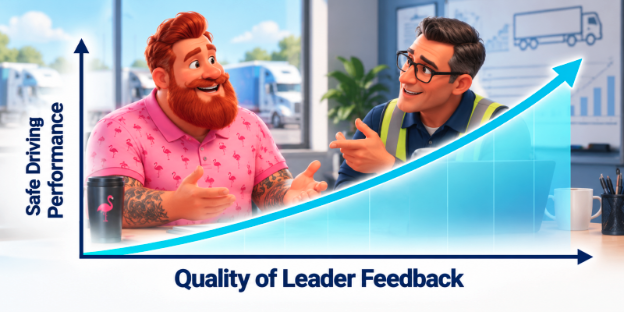
Ultimately, safety is a human performance issue. People interpret situations, make judgments, and adapt to changing conditions. A system that only tracks compliance may miss how people truly perform. The strongest safety programs go beyond verifying qualifications; they continuously learn about actual performance. Data, education, and human connection are most effective when combined. Data reveals risk, education builds capability, and coaching bridges the two by clarifying what data means and what needs to change.
While the non-domiciled CDL debate will be resolved through regulation, every fleet should ask: When information is incomplete, are we seeking better ways to understand risk, or just better proxies? Compliance shows if requirements are met. Stronger safety systems ask what the information reveals, what it cannot, and what must be learned next. That is where better decisions begin.
 Learner Login