A fleet may know exactly what a driver did, but not why. Telematics can identify risky behaviors such as speeding, harsh braking, and distraction, yet data alone rarely reveals the reasons behind these actions.
Research on driver coaching highlights the importance of moving beyond correction to encourage reflection, helping drivers understand their behavior and develop better responses.
As one study found, learning is more likely to “stick” when drivers are “coming up with their own answers, not something that has been fed to them.” For fleet leaders, the challenge is not just identifying risk but turning insights into coaching that drives real behavioral change.
Coaching is more than correcting the event
Driver coaching can easily become just another form of instruction. The supervisor has the data, the driver has the explanation, and the conversation becomes an exercise in establishing what happened and reminding the driver what they should have done differently. There is nothing wrong with correcting unsafe behavior.
Drivers need clear expectations, and organizations need accountability. However, if every coaching conversation begins and ends with the violation, the organization may correct the event without understanding the behavior that caused it. Research into driver coaching points to a different approach where active participation, reflection, and personalized feedback contribute to lasting behavioral change.
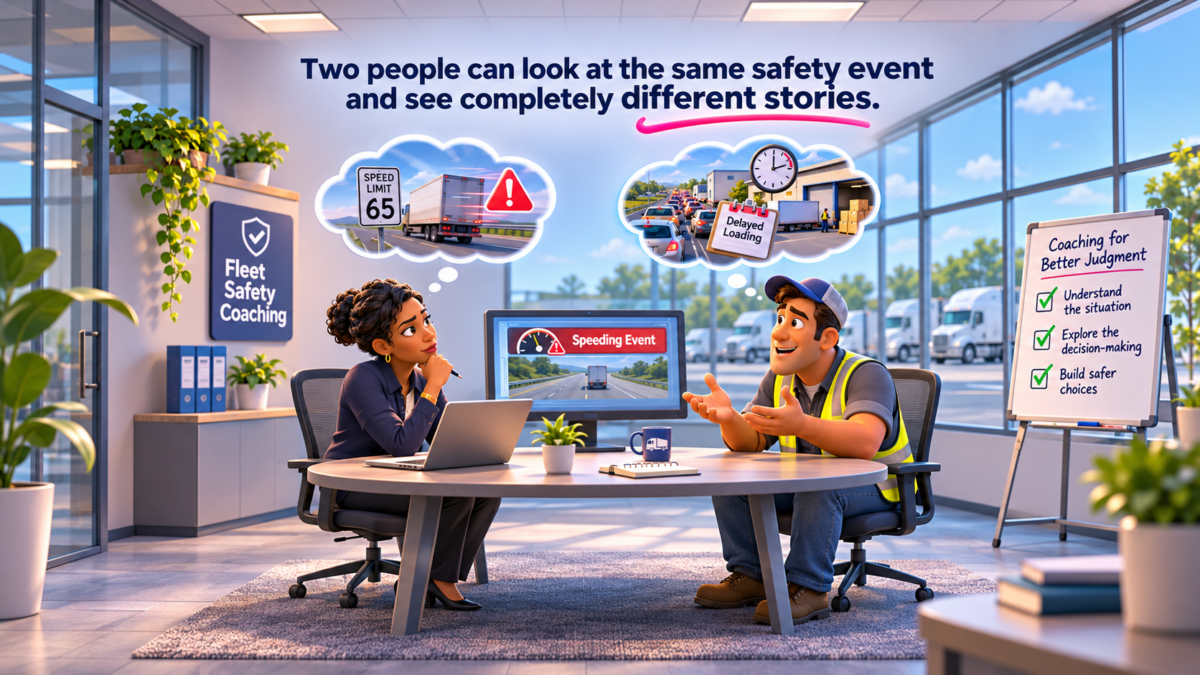
One qualitative study of adult driver learning found that learning sticks more when drivers come up with their own answers, not something fed to them. That is the difference between telling someone what to do and helping them understand how they make decisions. Instead of immediately asking, “Why were you speeding?” a supervisor might ask, “What was happening before this?” or “What were you trying to accomplish at that point in the route?” Those questions do not excuse the behavior. They provide context. A driver trying to make a difficult delivery window faces different pressures than a driver who simply chooses to disregard the speed limit. Both situations may require intervention, but understanding the circumstances can determine what kind of intervention is useful.
The driver is not operating in a vacuum
A supervisor may see a hard brake as a driving decision, while the driver may see it as the result of circumstances that began several minutes earlier. Traffic may have slowed down the route; a customer may have caused a delay, dispatch may have changed the delivery sequence, or the driver may have become concerned about being late. None of these circumstances makes an unsafe maneuver safe. Understanding them changes the quality of the coaching conversation.
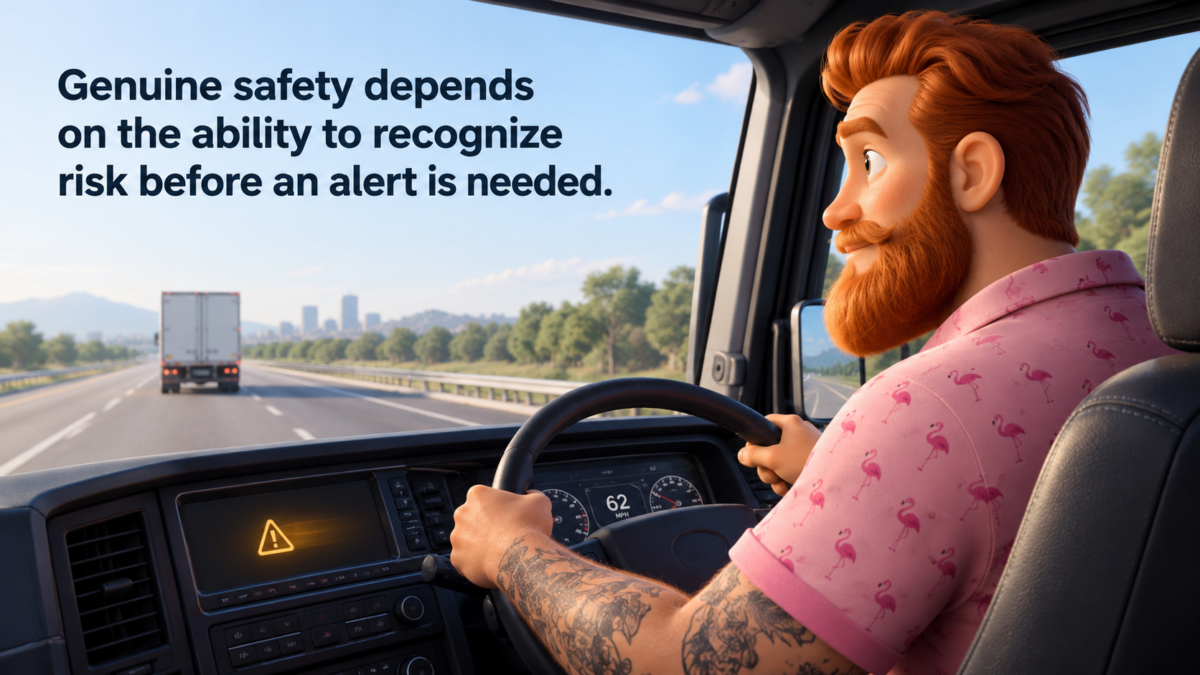
A data point can tell us that something happened. A conversation can reveal the pressures, assumptions, habits, and decisions around it. This is important because research suggests training focused mainly on practical driving skills can overlook psychological and behavioral factors such as risk perception and decision-making. Improving vehicle-control skills without addressing judgments can increase confidence without improving safe behavior. The objective is not simply to make drivers better at controlling a vehicle. It is to help them become better at recognizing risk, evaluating choices, and adapting when circumstances change.
Ask questions that make drivers think
The most effective coaching conversations encourage drivers to reflect on their decision-making. Supervisors can ask what drivers noticed before an event, what they aimed to achieve, what options they considered, and what they might do differently in a similar situation. This approach shifts the focus from blame to collaboration, helping both parties understand the decision and identify alternative choices. Collaboration is important because individuals often overlook their own behavioral patterns. For example, a driver may accelerate when behind schedule without realizing the link between time pressure and driving behavior. Meanwhile, a supervisor may notice repeated speeding without recognizing the specific conditions involved. Coaching conversations can help connect these patterns.
Research shows personalized coaching leads to measurable improvements in driving behaviors, and brief self-review sessions can reduce hazardous driving. The key is not to hold lengthy meetings after every event but to have short, focused conversations that are specific, behavior-based, and frequent enough to reinforce learning.
If drivers only receive feedback when technology identifies a problem, safety conversations may become associated with criticism. Specific and genuine positive reinforcement can change this dynamic. When a driver makes a safe choice, such as slowing down in difficult conditions or increasing following distance, supervisors should acknowledge it. This does not require formal praise; simply stating what was observed and why it mattered is effective.
Research indicates recognition reinforces specific actions, while punishment tends to suppress behavior more broadly. Effective coaching balances corrective feedback for unsafe decisions with targeted recognition of desired behaviors. The goal is not to praise every action but to make good decisions visible.
The supervisor is part of the learning environment
Coaching is shaped not only by what supervisors say but also by how they respond. If an organization claims safety is a priority but reacts more strongly to lateness than to risky driving, drivers may receive conflicting messages. Coaching is influenced by the broader work environment, and every conversation helps shape that environment.
Driving conditions are unpredictable, and no safety program can script every decision. However, coaching can help drivers improve their decision-making when unexpected situations arise. After a risky event, the conversation should go beyond identifying mistakes to help drivers understand the factors influencing their decisions and develop better responses for the future. The most valuable question may not be, “How do we stop this driver from doing that again?” but rather, “What can we learn from this decision to help the driver make a safer choice next time?” This shift transforms coaching from correction to an opportunity for learning, reflection, and improved decision-making.
Reference
Weibel, N., Yarmand, M., Biehle, C., Mac, E., Lu, H., & Xiang, V. (2025). Evaluating and Optimizing Coaching Methodologies for Fleet Safety and Performance: An Evidence-Based Analysis of Differentiation and Optimization Opportunities. UC San Diego: Department of Computer Science & Engineering. Retrieved from https://escholarship.org/uc/item/1z82z8pg
 Learner Login