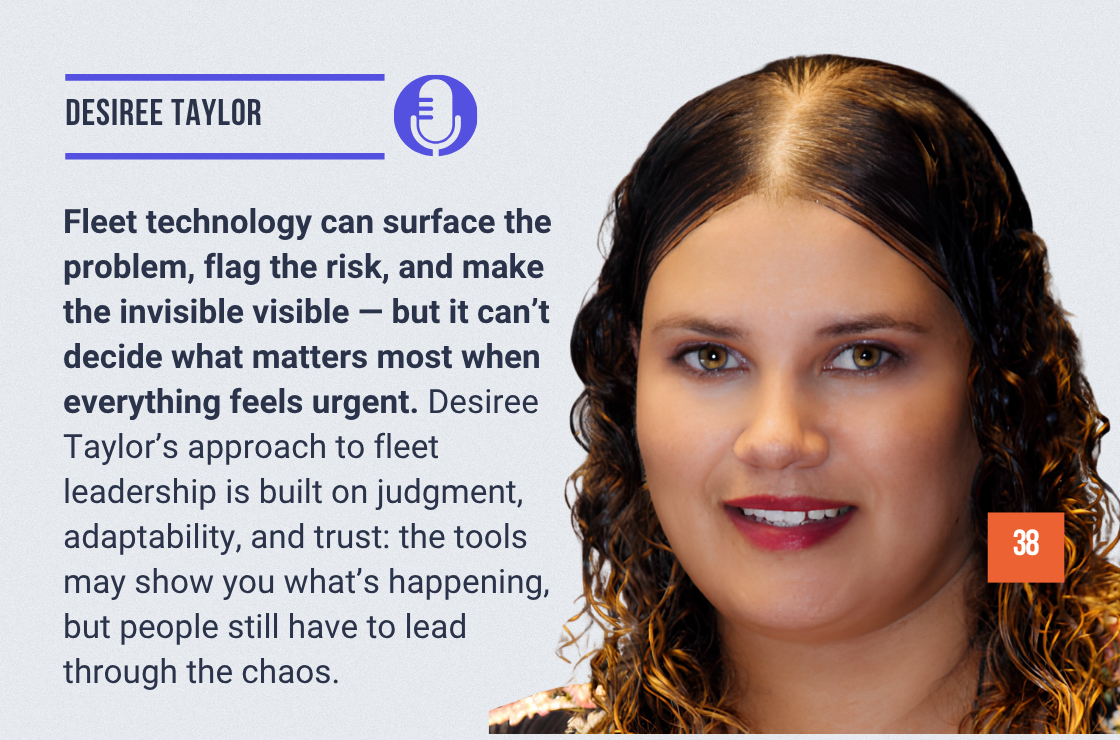
Fleet management is inherently unpredictable. Vehicles break down, drivers require assistance, and maintenance needs can become urgent without warning. For Desiree Taylor, fleet administrator at the California Governor’s Office of Emergency Services, managing this unpredictability is central to her role.
She refers to herself as a “chaos controller,” highlighting the importance of prioritizing, anticipating issues, and remaining adaptable as technology, regulations, and organizational needs evolve.
In this episode of Road Rageous, host Chad Lindholm speaks with Desiree about the realities of managing a dynamic fleet.
Here’s a glimpse of what you’ll learn:
- [1:24] How Desiree unexpectedly found her way into fleet and turned an opportunity into a career
- [4:19] Why persistence, professional development, and NAFA (NAFA Fleet Management Association) became important parts of her growth
- [6:08] What it means to be a “chaos controller” in fleet
- [8:16] How fleet professionals prioritize when multiple problems become urgent at once
- [10:15] Why preventive maintenance is one of the most important ways to stay ahead of fleet emergencies
- [13:24] How telematics and video have changed the way fleet professionals identify vehicle and safety issues
- [18:37] Why driver safety cannot be treated as a one-time training event
- [21:38] What technology can reveal about driver behavior — and what organizations must do with that information
- [22:18] How NAFA, training, certifications, and professional networks support continuous learning
- [27:00] Why fleet professionals need to adapt as technology and AI continue to evolve
- [31:50] Why fleet is often misunderstood as simply “managing vehicles”
- [33:05] The career advice that shaped Desiree’s approach to fleet
- [34:18] Why trusting yourself and persevering still matter in an increasingly technological industry
Fleet is where the unexpected becomes the everyday
In fleet, the unexpected is normal. Desiree didn’t set out to work in fleet long-term. She started in the court system, then moved to private industry, eventually handling assets at a small telecom company. When the company noticed high fuel costs and realized no one was managing the fleet, Desiree saw a chance and told the president, “Let me do it.” That moment launched her fleet career. What kept her interested wasn’t just the vehicles, but the nature of the work.
“There’s always something moving in fleet,” she says. She shares a story about a late-night breakdown: a vehicle stopped working at 1 a.m., leaving someone stranded on a hill. The issue was no longer just about the vehicle. Someone had to arrange a tow and get the person home. That’s what fleet leadership looks like. The job is operational, logistical, financial, mechanical, and human all at once. When several issues come up at once, knowing how to prioritize is just as important as technical skills. Desiree explains that requests are usually handled in the order they come in, but if an emergency response vehicle is needed, it jumps to the top of the list. This is more than just multitasking. Fleet leaders are always deciding what can’t wait.
Prevention changes the shape of the chaos
The best way to handle an emergency is to stop it from happening in the first place. That’s why Desiree strongly believes in preventive maintenance. At her previous job, she helped create a Power BI dashboard to spot vehicles needing immediate or upcoming maintenance. The goal was simple: find problems before they require a rushed response. The difference is huge.
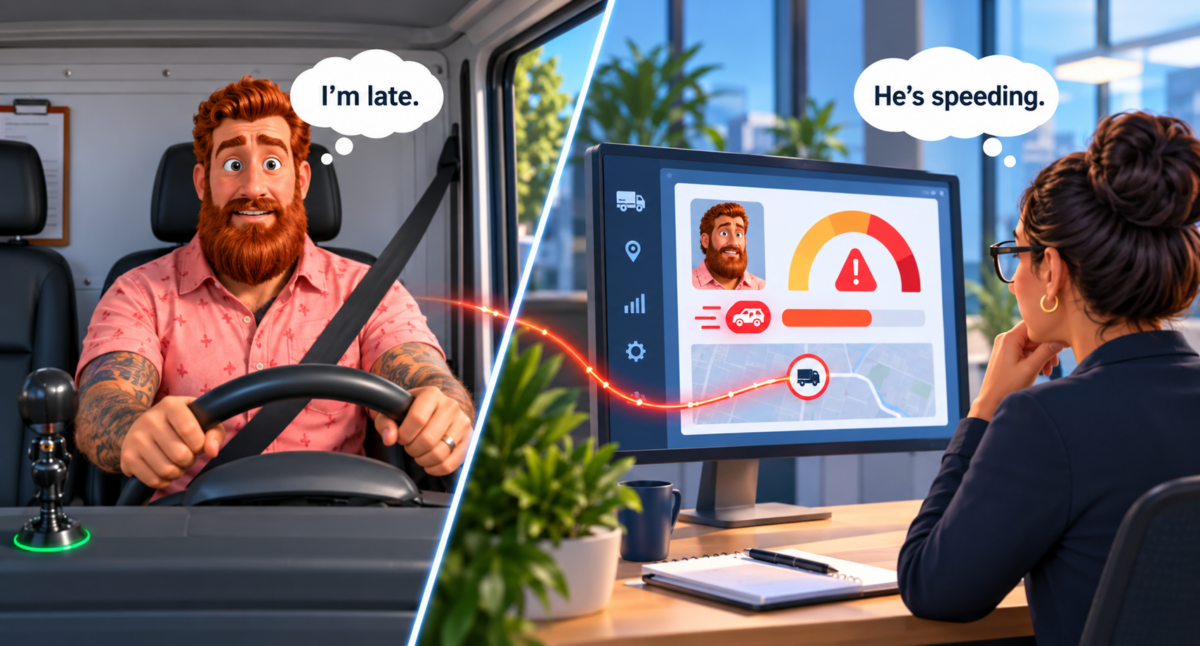
Getting a vehicle to a tire shop before it’s needed for an emergency is manageable. Dealing with a breakdown at the wrong time or place can be a safety and operational headache. Technology has made prevention easier. Desiree remembers when fleet data meant digging through Excel spreadsheets and using pivot tables and VLOOKUPs. Now, telematics can show engine codes and highlight issues that need attention. Video telematics adds more detail by showing what was happening around a vehicle during an incident, like speed, braking, and vehicle condition. But having more information doesn’t always lead to better decisions.
The real value comes when someone notices the data, understands what it means, and takes action. That’s a key point for any fleet using new technology. The aim isn’t just to collect more data, but to help people spot problems early and make better choices before things get worse.
Visibility is only the beginning of safer behavior
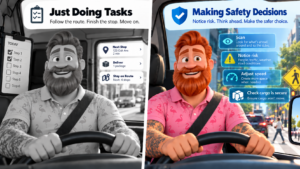
The same idea applies to driver safety. Desiree points out that companies often don’t invest enough in driver safety until an incident forces them to. Earlier in her career, she worked as a driver trainer, checking drivers and giving extra training after things like fender benders or tickets. This matters because many fleet drivers don’t see themselves as professional drivers. Driving might not be their main job, it’s just how they get to the work they were hired to do. But that doesn’t make driving any less important. Training shouldn’t end after orientation.
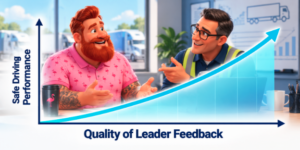
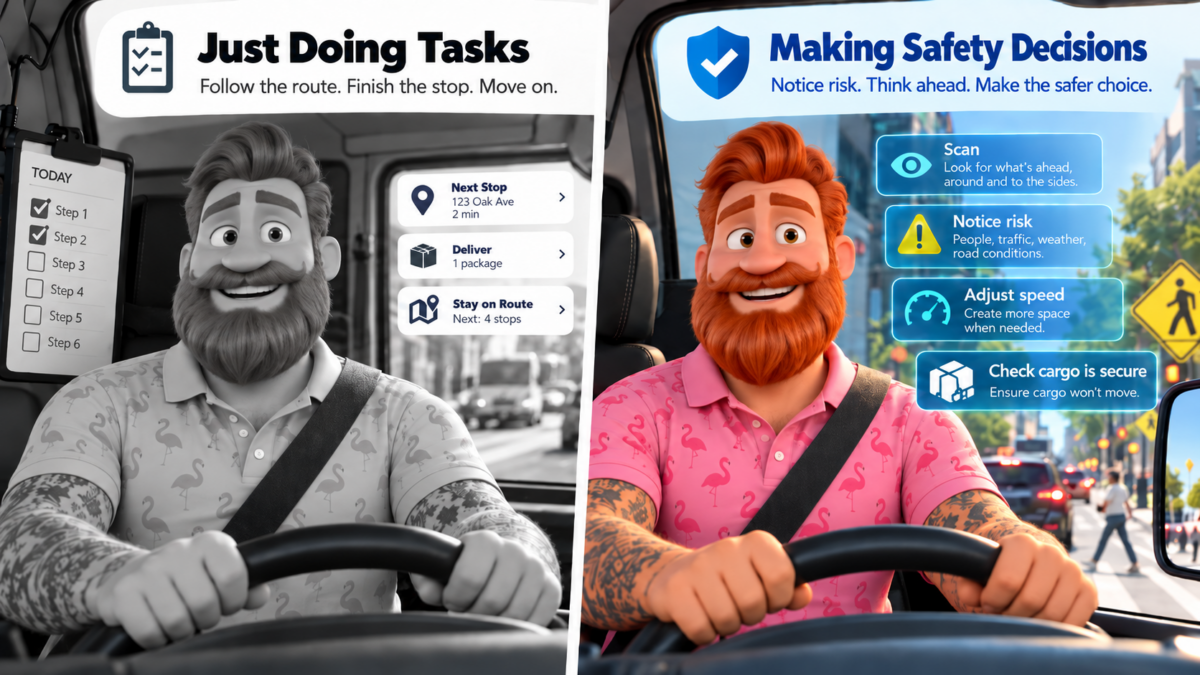
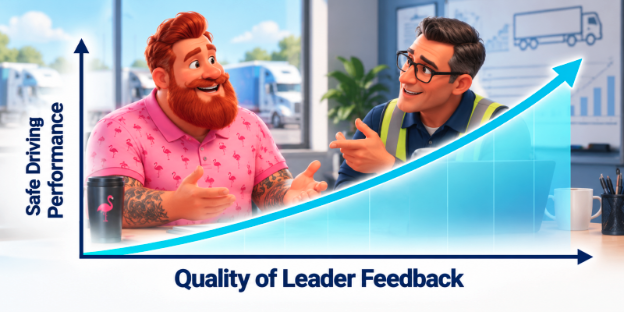
The conversation shows the risk of treating driver education as a one-time thing when someone joins the company. Skills and knowledge can fade, and without reminders, people can slip back into old habits. Technology makes it easier to spot these habits, but seeing unsafe behavior isn’t the same as changing it. If telematics or cameras show a driver often taking risks, the company gets useful information. The next step is deciding what to do with it. This is where the human side of fleet management comes in. A dashboard can’t have a coaching conversation. An alert can’t understand the pressure a driver felt. A data point can’t choose the right way to help someone make a better choice next time. Technology gives us visibility. People provide the response.
The future belongs to people who keep adapting
That human touch is even more important as technology moves forward. Desiree says that AI isn’t yet part of her current fleet operation, but she sees its potential. She thinks it could help organize and find information more easily, but it won’t replace fleet professionals. That idea comes up throughout the conversation. Fleet is changing. The tools are changing. The information available to fleet professionals is changing. But the need to keep learning stays the same.
Desiree credits NAFA for helping her grow professionally. She took training and earned certifications, including her CAFM, and says the organization has been a mentor throughout her career. She also values connecting with others in the industry and learning from different viewpoints. That might be one of the most important lessons for fleet leaders facing new technology. Being adaptable doesn’t mean jumping on every new tool right away. It means being willing to learn what a new tool can do, where it fits, and how it can help people make better decisions. The same thinking applies to leadership. Desiree remembers the advice she got when she first volunteered for fleet: “I’m gonna let you do it, but get it done.” She kept that mindset throughout her career.
When vehicles are down, problems need solving, and priorities keep shifting, fleet professionals have to find a way forward. But “getting it done” doesn’t mean doing everything alone. It means knowing when to use data, when to trust your experience, when to ask for help, when to learn something new, and when a situation needs human judgment that technology can’t provide.
Desiree’s final advice sums it up: “Trust yourself, trust your gut and keep persevering.”
Action Steps
- Look for opportunities to prevent reactive work. Review maintenance processes and identify where earlier intervention could prevent breakdowns, delays, or safety issues.
- Use technology to move from information to action. Telematics, video, fleet-management systems, and AI are most valuable when they help people identify what needs attention and decide what to do next.
- Treat driver education as continuous. Reinforce important behaviors beyond onboarding and use incidents, observations, and other available information to identify opportunities for additional coaching.
- Prioritize according to operational impact. When everything feels urgent, establish clear criteria for what genuinely needs to move to the front of the line.
- Build a professional network. Associations, peers, certifications, and shared experience can provide perspectives that a fleet leader may not find inside their own organization.
- Keep learning as the industry changes. Experience is valuable, but it should not become a reason to stop adapting.
Key Takeaways
- Fleet management is fundamentally an exercise in prioritization, adaptation, and problem-solving.
- Preventive maintenance is one of the most effective ways to reduce avoidable reactive work.
- Telematics and video can provide visibility that was previously difficult or time-consuming to obtain.
- Technology can identify risk, but people still have to interpret the information and change behavior.
- Driver safety requires continuous reinforcement rather than a one-time training event.
- Fleet should be understood as an operational function that directly affects an organization’s ability to do its work.
- Professional development and industry relationships help fleet leaders keep pace with a changing industry.
- The strongest fleet leaders combine technology with judgment, experience, learning, and human connection.
Conclusion
In the end, fleet may seem like it’s all about vehicles, but Desiree Taylor’s story shows it’s about much more. It’s about what happens when plans change. A vehicle breaks down. A driver needs help. An emergency shifts priorities. A dashboard shows a problem. New technology arrives. A familiar process stops working. The fleet professional has to respond. But the goal isn’t just to get better at putting out fires. It’s to build systems, knowledge, relationships, and habits that make emergencies less likely. That’s why “chaos controller” is such a fitting description for today’s fleet leaders.
The best don’t wait for certainty. They learn to spot changes, anticipate what might happen, and make decisions with the information and people they have. Because in fleet, there’s always another surprise. The real advantage is having people ready for it.
Resources mentioned in this episode
About Desiree Taylor
Desiree Taylor is a Fleet Administrator with the California Governor’s Office of Emergency Services, where she works with fleet operations in a public-sector and emergency-services environment. She has built her career across fleet operations, vehicle maintenance, logistics, claims, driver training, and fleet administration. She is also actively involved with NAFA and credits its training, certifications, and professional community with supporting her growth in the fleet industry.
Sponsor
IMPROVLearning — IMPROVLearning applies the principles of improv, comedy, connection, and education to create engaging learning experiences for drivers and organizations. Its approach focuses on helping people recognize hazards, make better decisions, and build safer behaviors through training that is designed to be practical, memorable, and human.
 Learner Login